Friday, May 7, 2010

"Play Ball" - The Arrival of Spring

“Play Ball” from bellowing voice of Umpire Martin "Bub" Daly signaled my official arrival of spring growing up in East Hampton. Little League season commenced.


East Hampton has had a famed and glorious baseball past, renowned in Middlesex County League play back to the 1880s. Its teams produced remarkable competitors who provided entertainment within our community and comradery between the players where factory workers or mechanics played along side the mill owners. Our baseball tradtions continue today involving nearly 500 boys and girls in this great American pastime. Saturday May 1st marked opening day at Seamster Park, named after my old friend Andrew Seamster, a man who had been deeply involved with youth baseball.


Most noticeable and evident Saturday was the lack of media attention. Here, enthusiastic kids involved in wholesome sport, with parents, grandparents and siblings rooting them on, didn’t even get a blip on the live eye evening news. If a drive by shooting had occurred or some kid was apprehended dealing drugs, news crews from Channel 8, 3, 30 and 61 would be competing to be first and live with the report. Such a poor commentary on what is really important and newsworthy!


But back to 1957 - remembering my first season – playing for the Cardinals. With my neighbor and best friend Bruce Tolhurst, we’d either bike or walk from our houses on East High Street just up from Thatcher's Drug Store, to Berwick Field or as known to the real oldtimers, Drury Field - now the location of Chatham Apartments behind St. Patrick’s Church. Governor William O'Neill Drive into the Senior Housing Complex was a mere walking path to our town's one little league field.


Our team's Manager, Ed Bazar or his eldest son Eddie, the Assistant Coach, would warm us up, hitting sharp grounders and deep fly balls before the games commenced. On that team were David and Tom Bazar, Bill Dennehy, Joey Kagerer, Alan and David Battit, Don Booth, Steve Clark, Bruce True, David Fortin, Frank Connolley, Harry McKinney, David Heckart and Batboy Jim McKinney, competing against the likes of the Dodgers, Giants, Reds and Cubs. Those summer evenings remind me of a time of innocence when the biggest trauma facing us was whether or not we would get a hit, or maybe get hit!

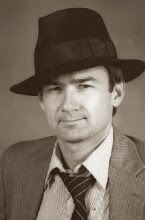
Maybe a prelude of my political career to come, I think they used my nick name in the caption above. Little League pitchers don't always have the most commanding control. I probably got on base more that year from being "beaned" than from hits.


I encourage you want to relive a little of that era. Some evening or Saturday morning, take in a game at Seamster Park next to Memorial School. With bleachers, announcer booths and food stand, it is a far cry from the wood plank benches of 1957. The surroundings have changed – these are among the premiere Little League fields in Connecticut – but the joy of the game has not.

Wednesday, April 28, 2010

New Arrivals in Tradition of East Hampton

Since I began writing about East Hampton Past, dozens of people have very kindly told me how much they enjoy reading about our Town’s history. Whether it is in Stop & Shop (how soon we forget Shaw's), restaurants such as Angelico's or Governor's Tavern, at town meetings, or church, I appreciate the comments and positive feedback and will keep writing.


On April 12th, the Laurel Ridge Association invited me to speak about EH since so many were new to our Town. As you may know, Laurel Ridge is an over 55 community located on the East side of the Lake on Route 66 and is situated near Bear Swamp.


This was a very enjoyable evening and I’m pleased that this engaging group chose EH as their home. Since the early 1700s, tremendously talented people have settled here. From my prospective, these transplants are equally able and given the nod, will contribute to the vitality and enhancement of our Town. So, welcome!

Topics that evening included a discussion on the founding of the bell industry by William Barton in 1808, and its importance to many other industries including Henry Ford's Model T. I also discussed the the creation of Chatham and some of our illustrious citizens such as Gov. William O’Neill. We all remember fondly our friend and neighbor Bill O’Neill, but we forget, he almost never became Governor. Unsuccessful in the 1960 and 1962 elections, with 1964s postponed due to a reapportionment stalemate, Bill had little desire to run again in 1966! Only significant arm-twisting prevailed and from there, his meteoric rise to the Governorship.


East Hampton Fife & Drum Corp Major, Morris Lanzi, then State Representative and Majority Leader, William O'Neill, and Governor Ella T. Grasso at the signing of Legislation making Yankee Doodle Connecticut's State Song. In background, members of the Fife & Drum Corp including Thomas Distefano.


Fielding many questions that evening, one of which I wanted to expand upon was how did Hurd State Park come about? Named for an early family that settled at Knowles Landing at Middle Haddam (bottom of Knowles Road) the now 900 acre park, located off of Rt. 151 as you leave Middle Haddam towards Moodus and situated on the Connecticut River.

Among the first land acquisitions by the newly established Parks and Forest Commission in 1915, Hurd State Park began with 28 acres purchased from Frederick and Sophia Colson in 1916. Apparently after threats of litigation, the Eureka Flint & Spar, a New Jersey company, sold 90 additional acres to the State in 1923. Eureka had planned on mining Feldspar from the site as it did at other quarries in Chatham, Haddam & Middletown, but State pressure changed management’s minds.

Today the Park has scenic and panoramic views of the Connecticut River Valley and numerous hiking trails and recreational opportunities – all for free!

Knowing Our Past Gives Me Better Information to Serve You


WILLIAM BARTON House circa 1765 - located at the crest of Barton Hill


William Barton was the Founder of the Chatham Bell Industry. From has hands and apprenticeships, no less than 37 other bell maker companies were formed and operated in the East Hampton Society area.

Understanding the past can often prevent you from making an incorrect decision about your future - especially when buying or selling your most valuable asset - your home!

I have the knowledge of our Community's past and the proven experience and ability to serve your current Real Estate needs - whether you are marketing an antique or historic home or a house constructed last week.

Please remember, I'm never too busy for your referral at Prudential Connecticut Reality. I'm always available to take your call and can be reached at (860) 918-4400.

Wednesday, April 7, 2010

Aftermath of EHHS Fire

After assessing the damage and salvageable portions of East Hampton High School (our current Center School) which was nearly half consumed by fire on March 27, 1962, the Fire Marshall determined that only the auditorium/gymnasium was deemed usable and accordingly it was subdivided into 4 classrooms in addition to the stage becoming a fifth. The old grammar school section was not affected by the flames and continued to be used as classrooms. The Congregational Church, American Legion and Library were also used for classes as we began double sessions - a way less than half a usable facility could still accommodate the entire high school population.

For the remainder of the 1962 school year, I attended afternoon sessions. Depending on ones point of view, that could be good or bad. If you liked to sleep late in the morning, starting classes at 12:15 PM was probably wonderful. If you were a morning person like me, the afternoon really dragged.


In September, my freshman Class of 1966 was split - half attending morning session and the other half afternoon. That was the most devastating aspect of the fire and aftermath. My class was the only one split. The reason related to the number of teachers. The class was split according to those in the college preparation program versus students in the secretarial or industrial arts programs. Because teachers couldn't work both morning and afternoon sessions and foreign language or advanced math or science teachers mainly taught the upper classes, it was deemed most economical and effective to split our freshman class to follow the teachers.


Most distressing and something that still bothers me today was that at the one point where students and classmates need to bond and build relationships and a comradely with their peers, we became two different and distinct Classes of 1966. Some of those scars probably exist to this day, and I, for one, am truly sorry for what it did to isolate and maybe alienate friends and classmates from one another.


If a similar tragedy occurred today, parents and students alike would not stand for such treatment. At that point, the decade of protest had not begun. In 1962, we had not yet emerged from our sheltered cocoons and complacency of the 1950s. JFK was still President. Walter Cronkite was just beginning to report about race riots and freedom marches in the South and our biggest concerns centered on nuclear missiles from the Soviet Union.


Those last 2 months of the 1962 were dreadful. The late afternoons were hot and sticky and the buildings reeked of that musty smoke that permeated the whole downtown.


Many events shape our lives. I think the fire molded me and many others to appreciate what we had and to use our given talent for the public good.

Friday, April 2, 2010

Disaster - The High School Consumed in Flames

Have you ever had the experience of being woken from a sound sleep, being incoherent or not grasping what someone is telling or asking you? To this day, that is what I remember about the night of March 27, 1962.

Around midnight, I was woken by my father who informed me the High School (our current Center School) was burning! I probably made (know I did make) some inappropriate comment and continued to doze. As the reality finally sunk in, I sat up with a start and looked out the window. We lived on the top of Barton Hill and my bedroom overlooked the Village Center. Flames had enveloped the entire downtown illuminating the night sky. Normally at that hour it would have been pitch blackness. That night however, the Congregational Church glowed yellow as the flames danced higher than the perch of that pointed steeple spire.


The blaze as reported in the Middletown Press showing the second story engulfed in flames.


Near total destruction to 16 classrooms – the entire Bevin Boulevard wing –totaling $600,000, occurred. The auditorium/gymnasium and the portion known as the old Center Grammar School was saved. A couple days later, some of us were allowed into the school to retrieve books if our lockers had been on the first floor of the burnt wing. It was an amazing outpouring by members of all the classes. Then grades 8 – 12 attended the high school. A huge percentage volunteered to assist in whatever cleanup we could, salvaging books and organizing them to be redistributed. School was cancelled for a week as the Board of Education, School Officials, Town Selectmen and numerous organizations such as the American Legion, the Library Board and Congregational Church all pitched in.


Immediately, those portions of the Bevin Boulevard wing salvageable were cleared, cleaned and made ready, as normalcy, or the closest we could get to it, set in.


A New High School?

Like most communities in the late 1950s, growing pains struck East Hampto and with it some contentious issues. In rapid succession, the Town’s leadership began proposing and planning for a Sewer System, a Water System, formation of an Industrial Development Commission, a Parks & Recreation Commission which assumed oversight of Sears Park, and, school expansion.

The post WW II “Baby Boom” stretched facilities. In some instances class sizes ranged upward to 35 or 40 students per class. The Cold War with the Soviet Union was fully engaged, Spuknik had been launched and served as the first volley in our race into outer space. The emphasis of government and educators was in the sciences and East Hampton had pitiful class and labratory facilities. Today we would gasp at student levels of over 25 per class, but then, nearly every community was caught flatfooted.

Expanding the High School (now Center School) or building a new facility, pitted neighbors against neighbors and young parents against senior citizens, many of whom were on limited incomes. The senior citizens had weathered the depression years and were leery to be saddled with significant property tax increases.

But on December 29, 1959, a Special Town Meeting approved a High School Building Committee to investigate (a) expansion of the current high school, (b) constructing a new high school, and (c) finding a proposed site for a new high school. The Committee was composed of the First Selectman, John Paonessa, Board of Finance members Robert Ostergren and Barbara Hurley, Board of Education members Richard Burnham and Roy Nicks and 4 citizens elected at the meeting, Gladys Smith, Winfred Eilert, John Callahan and Newton Percy Clark, who began their work immediately.

The Citizens Committee for Good Government rumored 17 to 19 mill increases with any new school. Many leaders rebutted. Mr. Ostergren stated, “The rumor involves a failure to understand the tax system of EH,” or, “is a deliberate attempt to deceive the voters on a new school issue.” Fed up with cramped and inadequate quarters, the townspeople approved $1.45 million in March 1961, for a new high school. And believe it or not, at a Town Meeting on March 26, 1962, added $195,000 for an additional science lab, an auditorium and library. Today such amenities would be considered necessary to meet accreditation standards.

Wednesday, March 3, 2010

Gold in Cobalt Hills

There’s gold in them there hills! With the market price at record highs near $1,200 an ounce and Good Ole Tom and the new businesses of the decade telling us to bring our old jewelry to harvest excess cash, it reminded me of Chatham’s gold, or more precisely, Cobalt. Named for the ore mined there along the creek east and south of Great Hill, it was also the site of gold mining in Colonial times. Although the lure of gold attracted not the throngs California in 1849 or Alaska in 1896 did, there was enough interest by Governor Jonathan Winthrop (1651, 1659-76) of his belief of mines and minerals in Middletown. This area was granted in the formation of Middletown and designated East Middletown or the area east of the Connecticut River. Winthrop, so convinced of their (the minerals) value as to think seriously of setting up works for improving them is evident from the grant made to him after the initial settlement of Middletown.


By resolution of the Middletown Selectmen, “The inhabitants of Middletown for the encouragement of the designs of our much honored governor, Mr. John Winthrop, for the discovery of mines and minerals and for the setting up of such works as shall be needful for the improvement of them, do hereby grant unto our said much honored governor any profitable mines or minerals that he shall find or discover upon any common land with the bounds of our town and such woodland as may be convenient for the use of the same, to the value of 500 to 1,000 acres, as it may lie so that it be not nearer than two or three miles from the present dwelling houses of the Town, and as the Town shall judge to be lest prejudicial to themselves for their necessary firewood, provided the Town shall have free liberty of commonage, as far as our Town bounds go, until the improvers shall see good to impropriate the same with inclosures – provided further that said governor, and such as may be co-improvers with him, will set up the works to improve such mines and minerals as he shall find, within these 5 years and let us know whether he doth accepts of this our grant with two years; and so be it to him and his heirs and associates from the time of setting up such works, else at two or fives years, and to be in liberty of the Town to grant the same to any other. May 23, 1661.”

President Stiles of Yale College wrote, “1787, Jan.1, Mr. Erkenlen’s (developer of Cobalt mine) visited me, full of his Cobalt mine and China voyage. He some years ago bought the Governor’s Ring, as it is called, or a mountain in the N.W. corner of East Haddam (Middle Haddam), comprehending about 800 acres, or about a square mile area. Here he finds plenty of Cobalt, which he manufactures into smalt with which is made the beautiful blue on China ware, etc.” “Gov. Trumbull has often told me that this was the place to which Gov. Winthrop of N. London used to resort with his servant, and after spending three weeks in the woods of this mountain, in roasting ores and assaying metals and casting gold rings, he use to return home to New London with plenty of gold. Hence this is called the Gov. Winthrop ring to this day.

From correspondence of the governor with learned men in England, it is possible that some knowledge of this locality crossed the Atlantic in his time (Winthrop’s). Be this as it may, no considerable efforts appear to have been made to find gold or any other mineral in this hill, for about a century after this grant was made. But about 1762, Dr. John Sebastian Stepancey, a German, employed a number of men, and made a horizontal opening into the hill in search of hid treasures. He continued his exertions but a short time. About 1770 he renewed them, in connection with tow other Germans, John Knool and Gominus Erkelens; but at length it appears that he made over the management of the concern to his associates, reserving to himself only a portion of the profits, and there was an agreement that what metals and minerals were sent to Great Britain should be consigned to Knool’s friends, and those sent to Holland to Erkelens’.


Geologists and Professors from UCONN actually did some experimental mining in the late 1980s recovering a reasonable (maybe an ounce or two) of gold, but determined there was insufficient quanity to ever make mining a commercially viable enterprise.