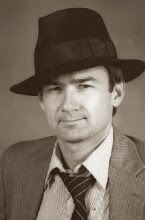
One would usually think very little excitement occurs in the bucolic village of Middle Haddam. Occasional outbursts over the boundaries of the Historic District, traffic when a refueling was being performed at Yankee Atomic, or church bells marking Sunday service or a holiday being the norm. But in August 23, 1923, a State Police officer was shot during an attempted burglary at the general store and post office. The Post Office is still in the same location, but a local realtor has the space once occupied by the general store.
The perpetrators of the break-in, John Bay, 24 years old from Pittsfield, MA and Steven Bubrowski, alias, Larry Richards, 17 years old from Northampton, MA were apprehended on the Air Line railroad tracks in Portland after fleeing the scene. The two were being held in Middletown but because the attempted robbery occurred in the Town of East Hampton, the accused had to be taken before an East Hampton Justice, EH like many towns then having its own court system. Bail had been fixed at $1,000 which neither man could secure.
Bay confessed to police to being ringleader of a gang that had terrorized lower Connecticut River Valley towns from Middletown to Old Saybrook, had attempted two previous break-ins in the Middle Haddam village. From Northampton, Bay and Richards made their way to Boston, leaving the Hub by train to Willimantic, secured an automobile ride to Middle Haddam. They wandered around town, waiting on the river bank until 11 P.M., whereupon they went to the store. They had just broken the glass of a rear window when surprised by state police. Bay immediately opened fire, wounding John Gondek in the upper right forearm. The two were apprehended when an informant spotted them on the railroad tracks cleaning their guns. Unnoticed, he tiptoed back to safety and immediately called the state police who arrived on the scene with the capture occurring without trouble.
Monday, June 28, 2010

Friday, June 18, 2010
Indian Remains
Today, if construction workers unearthed a Native American grave site or camp site, work would halt immediately and the State Archaeologist would perform an extensive survey under the Native American Graves Protection and Reparations Act. If determined a significant site, construction would be stopped. If just antiquities such as pottery and arrow heads or points were discovered, work and excavations would be halted until artifacts were fully recovered. If a burial site, work could stop permanently - this to honor our Native American predecessors with the proper respect – until the remains could be fully located and reburied in a safe cemetery site conducted with a proper Native American ceremony.
However, long before the Federal Legislation was enacted, things were markedly different. For years, people have found arrow heads and points around the perimeter of Lake Pocotopaug. One summer day at Sears Park with my son back in the late 1980s, I spotted a perfect arrow head, but alas, a young boy was sitting next to it and pulled it from the waters edge.
But years earlier, in late August 1923, George Walton, Maurice Galvin and Bartholomew Cavanaugh, while working on an excavation for N. B. Carrier near his casino at Lake Pocotopaug (now the location of the Mallard Cove condominiums), unearthed an Indian grave. According to the report at the time, the skull was complete - skin, bones and bones of the lower arm were unbroken - and also found in the grave were several arrow heads. Mr. Carrier gave the skull to a New Haven man. Other summer guests at the lake colony secured the other bones as souvenirs. Quite a travesty by today’s standards!
This prompted further excavations of ground near Carrier’s Casino and speculation that the skeletons of Chief Terramugus, after whom the twin islands were named (as well as Marlborough’s Lake) and also the beautiful maiden Pocotopaug (Princess Namonee) might also be unearthed. Fortunately no other graves were discovered or desecrated.
Saturday, June 5, 2010
Sears Park Through the Years
The Gift
Nestled on the westerly shore of Lake Pocotopaug is our beautiful Sears Park. In the summer of 1909 Sears family members, Dr. Cushman A. Sears, Mrs. Mary S. Gillette and Miss Carolyn “Carrie” D. Sears, approached the Selectmen offering to gift 3.93 acres of land situated on Lake Pocotopaug for the establishment of a park. The three were the surviving children of Stephen Griffith Sears who had resided in Chatham.
A study committee comprised of the Rev. H. E. Brown, Joel W. Smith and Fisk Brainard, was empanelled at a Special Town Meeting on October 4, 1909, to evaluate terms of the proposed gift. The Committee reported back to the Selectmen in late December 1908 and at a Special Town Meeting held January 8, 1910, the Town graciously voted to accept the gift, with the property and its care and maintenance to be held and administered by Trustees of Sears Park – a 9 person committee, 3 of whom would be the members of the Board of Selectmen (Ex-officio) and 6 others named in the title transfer. Title formally transferred on May 26, 1910.
Terms of the Gift
Among the terms of the gift in the “Memorandum of Organization” were:
Ø The first Board of Trustees was: Selectmen Fred S. Hall, Charles F. Shepards Jr., and William N. Markham, Ex-Officio, and Augustus H. Conklin, George W. Goff, George N. Lawson, Carl O. Johnson, Fred H. Barton and Ernest G. Cone Voting Trustees.
Ø The six non selectmen will have staggered terms of 1 to 6 years and successors will be elected by the remaining members of the Board with due notice to the towns people of the meeting date.
Ø Trustees to have the care of the Park with power to grade, plant, construct walks or Buildings or otherwise improve the grounds and structures as may be deemed by them best, providing that no moneys are expended or contracts entered into in excess of the appropriation for the park by the town, or are received as gift or from other sources or to contract any debt or other obligation except by special vote of the town.
Ø Said Trustees shall have the power to make such rules or regulations for the management of the park and the conduct of the people as seems to them best and to provide penalties for their violation, providing such rules and regulations are approved by the town at a regular town meeting and are posted conspicuously on the park.
Ø Said Trustees to have the right to let concessions for boating, restaurants, amusements or for other purposes which in their judgment are for the pleasure, comfort or convenience of the public, or may themselves purchase and let for hire such board, public amusements and conveniences providing that under no conditions shall alcoholic drinks, cigarettes or injurious drugs be sold there. (Notice this does not stipulate consumption)
Ø Said Trustees to submit annually to the town a report of their doings, giving in detail full statement of their receipts and expenditures and such other matters as may be of interest to the public.
Ø Said trustees shall have power to employ such landscape architects, engineers, superintendents, foremen and workmen or any other help as they may require on such terms and for such time as needed provided the compensation for service or amounts paid shall not be in excess of the income of the park for the year and whenever such expenditures seem liable to exceed such income said trustees shall discontinue services of all employees or as many of them as may be needed to prevent an excess of expenditures over income.
Ø The trustees shall serve without pay and shall not be interested in any of the financial transactions of the park or in any concessions or privileges given for a valuable consideration.
Ø The town shall appropriate not less than $100 a year for maintenance
Ø The trust may be transferred to a Board of Park Commissioners wherever the town provides such by a two-thirds vote at any regular called town meeting in conjunction with a two-thirds vote in its favor by the said trustees but in case such transfer is made the name of the park is to remain “Sears Park” and no and no alcoholic liquors shall ever be allowed sold on the park.
Ironically, the property that encompasses the park is part of the original 640 acres granted to James Wright who was the first land owner in Chatham in what was to become the East Hampton Society - this predating the creation of the second three mile division known as East Middletown.
Facilities at Sears Park
In 1914, the Casino was built at a cost of $1,409 by John A. Rich with the Village Improvement Society – the forerunner of the Carnival and then Old Home Day Committees – gifting $700 towards its construction. Those of recent memory recall that this original Casino or Pavilion as it has been known by for many years, burned to the ground on Saturday night, March 15, 2003; the fire being of suspicious origin. The Town Council [Donald P. Markham, Chairman, Christopher Goff, James E. “Pete” Brown, William Farrell, Jr., Thomas DiStefano, Jr., Melissa Engel, and Thomas Cordeiro, with Town Manager Alan Bergren] voted to rebuild the Pavilion at Sears Park at a cost of $301,000 from insurance proceeds along with a donation from the East Hampton Rotary Club of $26,000 for enhancements to the Pavilion. This was a three year project honoring the Centennial Anniversary of Rotary International. The new pavilion was dedicated May 1, 2005.
On May 11, 1961 the Trustees of Sears Park voted but failed to obtain the required two-thirds vote necessary to turn ownership, maintenance and operation over to the Parks and Recreation Commission created by the Town. At the adjourned meeting on May 18th, the Trustees in a second vote adopted a motion that turned “the Trust Land and Assets over to the Park and Recreation Commission of the Town of East Hampton.”
On March 16, 2004, the East Hampton Lions Club donated a 20’ by 40’ Gazebo / Picnic Shelter at an estimated cost of $15,000.
For many years, an excursion motor launch was docked at the Park. Other minor buildings – concession stands - stood on the easterly boundary but were demolished after the first land addition in 1968 from the Nichols Estate. Shortly thereafter, in 1970, the Town constructed both new public restrooms which are located near the entrance and tennis courts. In 1974, the boat launch area was graded and improved and rock obstructing the channel was removed from the water.
Under the auspices of the Town Council, and Board of Selectmen prior thereto, and Park and Recreation Commission have overseen the operations and maintenance of the Park and have made numerous upgrades to this pristine location used by so many for recreation, boating and swimming in our Lake.
Park Expansion
The Park has been expanded five times since 1910. Today it encompasses approximately 6.53 acres. From the first gift in 1910, the Town has taken advantage of other properties which have become available to expand it boundaries.
First, as approved by Special Town Meeting on June 26, 1968, .22 acres of land adjacent to Sears Park from the Estate of Mary K. “Mae” Nichols that was bounded by the Lake and Sears Park at a cost of $6,000.
The second, as approved at Special Town Meeting on August 8, 1972, appropriated $10,000 to acquire 1.29 acres of land from Marian R. Dunham, Charles B. Stone Sr. and the Estate of Florence Blau bounded by North Main Street, Sears Lane and Sears Park which is now the site of tennis courts and a parking area.
The third piece approved at Special Town Meeting on January 28 1986, acquired .74 acres on the northerly boundary of Sears Park running from North Main Street to the Lake from Richard and Maria Davilla with an appropriation of $132,000.
The fourth piece approved at Special Town Meeting on June, 1996, acquired .11 acres on the northerly boundary of the Davilla parcel running to the Lake from Edith Anderson as a gift to the Town.
The fifth piece approved at Special Town Meeting on October 7, 2004, acquired .14 acres on the northerly boundary of Sears Park running from North Main Street to the Lake from he northerly boundary of the Davilla parcel with an appropriation of $310,000 from Florence Smith.
Through the Years - Notably Events
At the February 22, 1933 Trustee Meeting, it was voted “to appropriate the sum of $100 for the purpose of clearing the park of surplus trees, bushes and rocks to provide work for the unemployed,” this being the height of the Great Depression.
At the September 11, 1934 meeting it was voted that “the Trustees accept the proposition of Selectman Merton Weir to build suitable Pillars at the entrance and Wall to extend along the front of Sears Park, the labor to be paid for by F.E.R.A. [the Federal Emergency Relief Act] and material and truckage to be paid from the Trustees of Sears Park. Provisions to be left are the right hand Pillar on which be placed a Bronze Tablet as a memorial to the heirs of Stephen G. Sears.” The tablet with anchor bolts made by the Bradley and Hubbard Mfg. Co. cost $87.50.
At the April 22, 1935 Trustee meeting, resolution passed that “granted the Central Connecticut Council Inc. of Boy Scouts of American the privilege of erecting and maintaining a temporary dock and roadway to said dock as per Scout Executive John D Roberts letter dated March 7, 1935, such privilege to extend for a term of eight years.
At the same meeting, the Trustees voted to accept Mr. Eugene Nichols gift of $200 and thank him for the services to the park for the many past years. The Trustees then voted that they would grant no concessions in the Park for a term of two years. Mr. Nichols operated his own concession stands from his property which was eventually purchased by the Town.
At the July 8, 1946 meeting, the Trustees voted to increase the insurance coverage on the Pavilion not to exceed $4,000.
At the May 25, 1948 trustee meeting, voted to charge a fee of 25 cents for parking cars in the Park on Saturdays, Sundays and Holiday in order to provide extra revenue for the Park. On June 15th, a short meeting was held with William and Milton Nichols at the Park. The Nichol’s Brothers offered the Trustees a donation of $200, which was accepted. In view of this gift, the Trustees decided not to charge parking during the 1948 season.
At the June 7, 1951 meeting, the Trustees continued the policy of no concessions after receipt of a $125 gift from Mr. William Nichols. The Trustees also voted to reject the request from the Village Improvement Society for a “Merry Go Round” or similar amusement devise at their Carnival to be located in Sears Park.
At the July 8, 1952 meeting, Mr. William Nichols was not reappointed a Superintendent as he was no longer a resident of East Hampton. Motion was made by Trustee Leon Voisin that Christopher Christopher be contacted to see if he would act as Superintendent. Following the meeting, Mr. Christopher was contacted and agreed to act as Superintendent for the year.
The Sears Family
Deacon Stephen Griffith Sears was born in Chatham September 27, 1803, married Emily Veazey, daughter of Eleazar and Elizabeth (West) Veazey on May 3, 1831 and died in East Hampton Society on October 12, 1874. Sears was descended from a long line of family in Yarmouth and Harwich on Cape Cod. They had four children: Mary Elizabeth, born January 12, 1835, who married Bennette Gillette; Clark Osprey, who was a State Representative in 18756-76 and appointed Postmaster in 1885, was born July 24, 1836, and married Charlotte Josephine Fielding; Cr. Cushman Allen Sears, born September 26, 1838 and married Evelyn Lay; and, Caroline Desire Sears, born April 24, 1843.
The eulogy delivered at the funeral of Stephen Sears from a book recorded on the Sears Genealogy was as follows:
“In the life of Deacon Sears, there were no striking events, nothing that could be called great or grand, yet the whole life, viewed in its course of seventy years, leaves the impression on the hearts of all who knew him, of completeness, of beauty, of harmony; his best eulogy is in the hearts of those who knew him best and longest.
One who knew him from youth to old age, testified, that he was never guilty of a mean action, even as a boy; that even then his conduct was irreproachable.
He was a perfect example of a man whose life was a continuous moral growth, and yet he sought for the deeper life based on faith in Christ.
His whole speech was a witness to the need of the Christ-life in the soul; but not only in words did his witness consist, it was in the course of his daily life, in the faithful performance of all his duties, that he gave testimony to Him who came to do His Father’s work.
Those who loved him well, tell how scrupulously he performed every little duty in the family, and how anxious he was to relieve his family, and make their burdens light.
Like a true Christian, his light threw a cheerful glow around his household hearth, and made his home one of happiness and content.”
Friday, May 28, 2010
Memorial Day 2010
Monday, May 31, is Memorial Day, or as my grandmother called it, Decoration Day. That designation emanated from the order of Gen. John Logan in 1868 that appointed May 30th a day “for the purpose of strewing with flowers the graves of comrades who died in defense of their country during the late rebellion (the Civil War).” In the middle of every May, I would accompany her to Lakeview Cemetery where around all our deceased relatives graves the decorative bushes were trimmed and tidied and geraniums planted.
As former Gov. William O’Neill used to say, “Who doesn’t like a parade?” And here in East Hampton, we always celebrated Memorial Day with a Parade. Excited kids, streamers and American Flags affixed to bicycles, a Poppy Queen, VFW and American Legion Color Guards, the High School Band, our Town's elected leaders, Fife and Drum Corp., Boy Scouts, Girl Scouts, Cubs and Brownies, and fire engines, organized in formation at the Congregational Church, stepping off at 9:15 sharp!
As former Gov. William O’Neill used to say, “Who doesn’t like a parade?” And here in East Hampton, we always celebrated Memorial Day with a Parade. Excited kids, streamers and American Flags affixed to bicycles, a Poppy Queen, VFW and American Legion Color Guards, the High School Band, our Town's elected leaders, Fife and Drum Corp., Boy Scouts, Girl Scouts, Cubs and Brownies, and fire engines, organized in formation at the Congregational Church, stepping off at 9:15 sharp!

At Lakeview Cemetery prayers for the honored deceased veterans, an honor guard firing blanks in salute and trumpeters blowing the haunting, echoing, “taps” as all stood in silence and remembrance. Marchers would then continue on to the Congregational Church lawn and the Veterans Memorial.
More prayers, a salute to our Nations Flag and speeches. Following the reading of each veteran’s name laid to rest during the year, a snare drum would paralyze each in attendence as we remembered.
The High School band played stirring pieces such as the Star Spangled Banner or Battle Hymn of the Republic and students would recite “In Flanders Fields” and Lincoln’s unforgettable tribute that began, “Four score and seven years ago….” To this day my eyes tear up whenever I hear these words.
Monday, our National Holiday, is a time to drink in the importance remembering those who served so valiantly for all that we have. I invite you to join the parade.
Tuesday, May 11, 2010
In Honor of Our Veterans
On May 31st, like thousands of other communities around our Nation, East Hampton will celebrate Memorial Day, in honor of those who so valiantly gave their lives for the freedom and liberty we all enjoy, but often take for granted. Probably very few have ever noticed or studied our first Veterans Memorial. It sits in the Village Center on the corner of the Congregational Church lawn. The annual Memorial Day Parade culminates their and a tradional service occurs, remembering those veterans who passed away during the year. Typically High School Students make presentations such as The Gettysburg Address and the poem In Flanders Fields with a guest speaker.
The Memorial's origins in the Village Center stem from a public meeting held at Carriers’s Casino attended by over 800 people on the first Armistice Day (Nov. 11, 1920) recognizing the end of World War I, after the organization of the local American Legion Post No. 64. Carl Price, author of Yankee Township, delivered an address about The Town in Seven Wars, and his “remarks were concluded with a taunting reproach for East Hampton's failure to erect a memorial to the men and women who had represented the town so valiantly in the several wars.” Present was Henry T. Sellew, Civil War Veteran, then over 80, who left the meeting “in high dudgeon, vowing that he would not rest content until such a monument had been erected, even if he had to go get the stone himself.” “This he did literally, with the assistance of Mayo S. Purple; and sixteen oxen bore the huge glacial bolder from Marlborough, where on the church green it was set up.”
Dedicated on Labor Day 1921, Thomas J. Bannigan, Vice Commander of the National American Legion and Governor Everett J. Lake unveiled the monument, which disclosed a rough monolith typical of the New England hillsides, and bearing bronze tablets inscribed “TO THE MEMORY OF THE PATRIOT MEN OF CHATHAM WHO BRAVELY BORE THEIR PART IN THE WAR OF THE AMERICAN REVOLUTION; THE WAR OF 182; THE CIVIL WAR; AND WW I,” with their names thereon inscribed.
Friday, May 7, 2010
"Play Ball" - The Arrival of Spring
“Play Ball” from bellowing voice of Umpire Martin "Bub" Daly signaled my official arrival of spring growing up in East Hampton. Little League season commenced.
But back to 1957 - remembering my first season – playing for the Cardinals. With my neighbor and best friend Bruce Tolhurst, we’d either bike or walk from our houses on East High Street just up from Thatcher's Drug Store, to Berwick Field or as known to the real oldtimers, Drury Field - now the location of Chatham Apartments behind St. Patrick’s Church. Governor William O'Neill Drive into the Senior Housing Complex was a mere walking path to our town's one little league field.
 Maybe a prelude of my political career to come, I think they used my nick name in the caption above. Little League pitchers don't always have the most commanding control. I probably got on base more that year from being "beaned" than from hits.
I encourage you want to relive a little of that era. Some evening or Saturday morning, take in a game at Seamster Park next to Memorial School. With bleachers, announcer booths and food stand, it is a far cry from the wood plank benches of 1957. The surroundings have changed – these are among the premiere Little League fields in Connecticut – but the joy of the game has not.
East Hampton has had a famed and glorious baseball past, renowned in Middlesex County League play back to the 1880s. Its teams produced remarkable competitors who provided entertainment within our community and comradery between the players where factory workers or mechanics played along side the mill owners. Our baseball tradtions continue today involving nearly 500 boys and girls in this great American pastime. Saturday May 1st marked opening day at Seamster Park, named after my old friend Andrew Seamster, a man who had been deeply involved with youth baseball.
Most noticeable and evident Saturday was the lack of media attention. Here, enthusiastic kids involved in wholesome sport, with parents, grandparents and siblings rooting them on, didn’t even get a blip on the live eye evening news. If a drive by shooting had occurred or some kid was apprehended dealing drugs, news crews from Channel 8, 3, 30 and 61 would be competing to be first and live with the report. Such a poor commentary on what is really important and newsworthy!
But back to 1957 - remembering my first season – playing for the Cardinals. With my neighbor and best friend Bruce Tolhurst, we’d either bike or walk from our houses on East High Street just up from Thatcher's Drug Store, to Berwick Field or as known to the real oldtimers, Drury Field - now the location of Chatham Apartments behind St. Patrick’s Church. Governor William O'Neill Drive into the Senior Housing Complex was a mere walking path to our town's one little league field.
Our team's Manager, Ed Bazar or his eldest son Eddie, the Assistant Coach, would warm us up, hitting sharp grounders and deep fly balls before the games commenced. On that team were David and Tom Bazar, Bill Dennehy, Joey Kagerer, Alan and David Battit, Don Booth, Steve Clark, Bruce True, David Fortin, Frank Connolley, Harry McKinney, David Heckart and Batboy Jim McKinney, competing against the likes of the Dodgers, Giants, Reds and Cubs. Those summer evenings remind me of a time of innocence when the biggest trauma facing us was whether or not we would get a hit, or maybe get hit!
Maybe a prelude of my political career to come, I think they used my nick name in the caption above. Little League pitchers don't always have the most commanding control. I probably got on base more that year from being "beaned" than from hits.I encourage you want to relive a little of that era. Some evening or Saturday morning, take in a game at Seamster Park next to Memorial School. With bleachers, announcer booths and food stand, it is a far cry from the wood plank benches of 1957. The surroundings have changed – these are among the premiere Little League fields in Connecticut – but the joy of the game has not.
Wednesday, April 28, 2010
New Arrivals in Tradition of East Hampton
Since I began writing about East Hampton Past, dozens of people have very kindly told me how much they enjoy reading about our Town’s history. Whether it is in Stop & Shop (how soon we forget Shaw's), restaurants such as Angelico's or Governor's Tavern, at town meetings, or church, I appreciate the comments and positive feedback and will keep writing.
On April 12th, the Laurel Ridge Association invited me to speak about EH since so many were new to our Town. As you may know, Laurel Ridge is an over 55 community located on the East side of the Lake on Route 66 and is situated near Bear Swamp.
This was a very enjoyable evening and I’m pleased that this engaging group chose EH as their home. Since the early 1700s, tremendously talented people have settled here. From my prospective, these transplants are equally able and given the nod, will contribute to the vitality and enhancement of our Town. So, welcome!
Topics that evening included a discussion on the founding of the bell industry by William Barton in 1808, and its importance to many other industries including Henry Ford's Model T. I also discussed the the creation of Chatham and some of our illustrious citizens such as Gov. William O’Neill. We all remember fondly our friend and neighbor Bill O’Neill, but we forget, he almost never became Governor. Unsuccessful in the 1960 and 1962 elections, with 1964s postponed due to a reapportionment stalemate, Bill had little desire to run again in 1966! Only significant arm-twisting prevailed and from there, his meteoric rise to the Governorship.

East Hampton Fife & Drum Corp Major, Morris Lanzi, then State Representative and Majority Leader, William O'Neill, and Governor Ella T. Grasso at the signing of Legislation making Yankee Doodle Connecticut's State Song. In background, members of the Fife & Drum Corp including Thomas Distefano.
Fielding many questions that evening, one of which I wanted to expand upon was how did Hurd State Park come about? Named for an early family that settled at Knowles Landing at Middle Haddam (bottom of Knowles Road) the now 900 acre park, located off of Rt. 151 as you leave Middle Haddam towards Moodus and situated on the Connecticut River.
Among the first land acquisitions by the newly established Parks and Forest Commission in 1915, Hurd State Park began with 28 acres purchased from Frederick and Sophia Colson in 1916. Apparently after threats of litigation, the Eureka Flint & Spar, a New Jersey company, sold 90 additional acres to the State in 1923. Eureka had planned on mining Feldspar from the site as it did at other quarries in Chatham, Haddam & Middletown, but State pressure changed management’s minds.
Today the Park has scenic and panoramic views of the Connecticut River Valley and numerous hiking trails and recreational opportunities – all for free!
On April 12th, the Laurel Ridge Association invited me to speak about EH since so many were new to our Town. As you may know, Laurel Ridge is an over 55 community located on the East side of the Lake on Route 66 and is situated near Bear Swamp.
This was a very enjoyable evening and I’m pleased that this engaging group chose EH as their home. Since the early 1700s, tremendously talented people have settled here. From my prospective, these transplants are equally able and given the nod, will contribute to the vitality and enhancement of our Town. So, welcome!
Topics that evening included a discussion on the founding of the bell industry by William Barton in 1808, and its importance to many other industries including Henry Ford's Model T. I also discussed the the creation of Chatham and some of our illustrious citizens such as Gov. William O’Neill. We all remember fondly our friend and neighbor Bill O’Neill, but we forget, he almost never became Governor. Unsuccessful in the 1960 and 1962 elections, with 1964s postponed due to a reapportionment stalemate, Bill had little desire to run again in 1966! Only significant arm-twisting prevailed and from there, his meteoric rise to the Governorship.
East Hampton Fife & Drum Corp Major, Morris Lanzi, then State Representative and Majority Leader, William O'Neill, and Governor Ella T. Grasso at the signing of Legislation making Yankee Doodle Connecticut's State Song. In background, members of the Fife & Drum Corp including Thomas Distefano.
Fielding many questions that evening, one of which I wanted to expand upon was how did Hurd State Park come about? Named for an early family that settled at Knowles Landing at Middle Haddam (bottom of Knowles Road) the now 900 acre park, located off of Rt. 151 as you leave Middle Haddam towards Moodus and situated on the Connecticut River.
Among the first land acquisitions by the newly established Parks and Forest Commission in 1915, Hurd State Park began with 28 acres purchased from Frederick and Sophia Colson in 1916. Apparently after threats of litigation, the Eureka Flint & Spar, a New Jersey company, sold 90 additional acres to the State in 1923. Eureka had planned on mining Feldspar from the site as it did at other quarries in Chatham, Haddam & Middletown, but State pressure changed management’s minds.
Today the Park has scenic and panoramic views of the Connecticut River Valley and numerous hiking trails and recreational opportunities – all for free!
Subscribe to:
Posts (Atom)