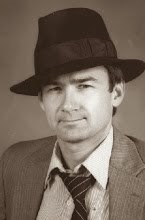
To those who grew up in East Hampton, Memorial Day was always special. As a child, Memorial Day, and especially the parade, was the "big event," which certainly would pale in comparison to the big production festivities such as those seen on TV from our Nations Capitol. But our community, joining together - kids laughing, adults lining the parade route and applauding those marching - to me, was so much more meaningful. And the solemn services at the Memorial at the High School, a gun salute and taps at Lakeview Cemetery and the address by guest speaker and reading of the rolls of fallen veterans with the crisp drum role made this event come alive.
Our Nation is fortunate to have a resurgence of respect and patriotism remembering the sacrifices of those soldiers who serve now and who served in our past, protecting and preserving our freedom. That to some extent came about through the tragedy of 9-11.
The realization that war is much more than a glorious exercise jumped nightly into our living rooms as reporters such as Walter Cronkite brought us to the battlefields of Vietnam, displaying the brutality of combat, the horror, the fatigue, the destruction, the noise, the obscenities, and most vividly, in spectra color, the blood and the death of your soldiers. Many became disillusioned. And the respect and honor of those that served was rarely accorded.
I have had the privilege to be elected and serve as State Representative and the honor on several occasions to present the Memorial Day Address. Preparing remarks in 1987 as I returned from meetings in Washington DC with members of our Congressional Delegation, my thought centered on some of the monuments that I took a few moments to tour while there. To the crowd gathered that Memorial Day, I posed a riddle: what does 43E - 3, 44E - 24 and 20W - 99 have in common? The answer - they identify the panel and line and position recognizing names of three young men who grew up in this town - boys I went to high school with - men killed in battle in Vietnam - James Banning, Bernd Bachleda and David Swann. In the simplicity of those black marble panels, hardly visible from Constitution Avenue as one walks below street grade to view them, shall forever humble this Nation as they display the names of over 58,000 who perished in that Asian Nation.
Monday, Sgt. Aaron McLaughlin will give the Memorial Day address. Sgt. McLaughlin grew up in East Hampton and is a decorated member of the U.S. Army having served in Iraq and Afghanistan. He is a recipient of the Purple Heart. On a personal note, I remember Sgt. McLaughlin as a boy in what were simpler times when he played Little League baseball, my son Greg being a member of the same team. I also know how proud his grandmother, Ann, is of Aaron and how his grandfather Bill, a veteran and now deceased, was of his grandson.
So my invitation to one and all. Come watch the parade on Memorial Day. Listen to the observances - reading the roll of deceased veterans, the Gettysburg Address, the poem "In Flanders Fields," our local school bands, the solemn prayers, and Sgt. McLaughlin. Don't we owe those who have served and sacrificed at least that?
Showing posts with label Walter Cronkite. Show all posts
Showing posts with label Walter Cronkite. Show all posts
Wednesday, May 25, 2011

Wednesday, April 7, 2010
Aftermath of EHHS Fire
After assessing the damage and salvageable portions of East Hampton High School (our current Center School) which was nearly half consumed by fire on March 27, 1962, the Fire Marshall determined that only the auditorium/gymnasium was deemed usable and accordingly it was subdivided into 4 classrooms in addition to the stage becoming a fifth. The old grammar school section was not affected by the flames and continued to be used as classrooms. The Congregational Church, American Legion and Library were also used for classes as we began double sessions - a way less than half a usable facility could still accommodate the entire high school population.
For the remainder of the 1962 school year, I attended afternoon sessions. Depending on ones point of view, that could be good or bad. If you liked to sleep late in the morning, starting classes at 12:15 PM was probably wonderful. If you were a morning person like me, the afternoon really dragged.
In September, my freshman Class of 1966 was split - half attending morning session and the other half afternoon. That was the most devastating aspect of the fire and aftermath. My class was the only one split. The reason related to the number of teachers. The class was split according to those in the college preparation program versus students in the secretarial or industrial arts programs. Because teachers couldn't work both morning and afternoon sessions and foreign language or advanced math or science teachers mainly taught the upper classes, it was deemed most economical and effective to split our freshman class to follow the teachers.
Most distressing and something that still bothers me today was that at the one point where students and classmates need to bond and build relationships and a comradely with their peers, we became two different and distinct Classes of 1966. Some of those scars probably exist to this day, and I, for one, am truly sorry for what it did to isolate and maybe alienate friends and classmates from one another.
If a similar tragedy occurred today, parents and students alike would not stand for such treatment. At that point, the decade of protest had not begun. In 1962, we had not yet emerged from our sheltered cocoons and complacency of the 1950s. JFK was still President. Walter Cronkite was just beginning to report about race riots and freedom marches in the South and our biggest concerns centered on nuclear missiles from the Soviet Union.
Those last 2 months of the 1962 were dreadful. The late afternoons were hot and sticky and the buildings reeked of that musty smoke that permeated the whole downtown.
Many events shape our lives. I think the fire molded me and many others to appreciate what we had and to use our given talent for the public good.
For the remainder of the 1962 school year, I attended afternoon sessions. Depending on ones point of view, that could be good or bad. If you liked to sleep late in the morning, starting classes at 12:15 PM was probably wonderful. If you were a morning person like me, the afternoon really dragged.
In September, my freshman Class of 1966 was split - half attending morning session and the other half afternoon. That was the most devastating aspect of the fire and aftermath. My class was the only one split. The reason related to the number of teachers. The class was split according to those in the college preparation program versus students in the secretarial or industrial arts programs. Because teachers couldn't work both morning and afternoon sessions and foreign language or advanced math or science teachers mainly taught the upper classes, it was deemed most economical and effective to split our freshman class to follow the teachers.
Most distressing and something that still bothers me today was that at the one point where students and classmates need to bond and build relationships and a comradely with their peers, we became two different and distinct Classes of 1966. Some of those scars probably exist to this day, and I, for one, am truly sorry for what it did to isolate and maybe alienate friends and classmates from one another.
If a similar tragedy occurred today, parents and students alike would not stand for such treatment. At that point, the decade of protest had not begun. In 1962, we had not yet emerged from our sheltered cocoons and complacency of the 1950s. JFK was still President. Walter Cronkite was just beginning to report about race riots and freedom marches in the South and our biggest concerns centered on nuclear missiles from the Soviet Union.
Those last 2 months of the 1962 were dreadful. The late afternoons were hot and sticky and the buildings reeked of that musty smoke that permeated the whole downtown.
Many events shape our lives. I think the fire molded me and many others to appreciate what we had and to use our given talent for the public good.
Subscribe to:
Posts (Atom)